Εμφάνιση αναρτήσεων με ετικέτα art modern. Εμφάνιση όλων των αναρτήσεων

Τρίτη 7 Νοεμβρίου 2017

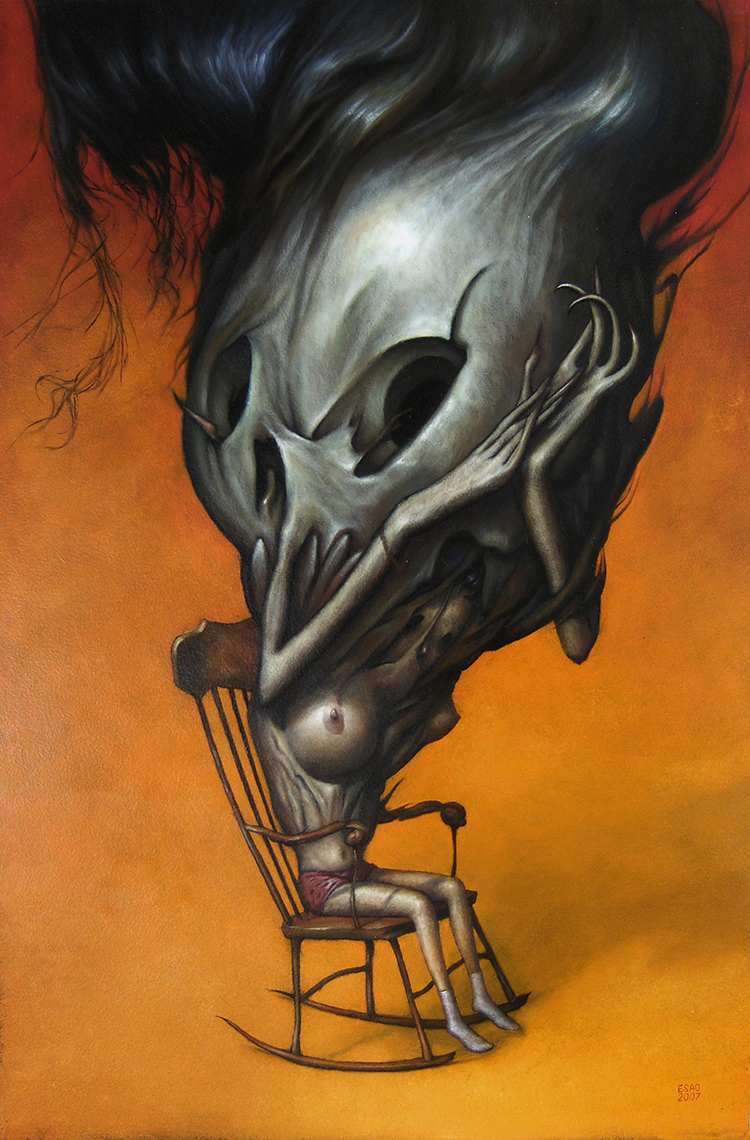
Esao Andrews


Esao Andrews is an American painter, working with oil on wood panels. His work blends Gothic grotesque, erotic and surrealism. On the subject of the diversity of his work, Andrews states that he is constantly looking for new subject matter as he does not want to become known for one subject. Andrews also stated when asked about 'good vs evil' in his work that he thinks more along the lines of dominant versus subordinate; that he is attempting to catch a moment of mystery or deviousness in his work.

I'm afraid of becoming labelled. I'm young and I'm early in my career, but things have been picking up, and I've become obsessed with this issue. Like, I don't want to be known as one of those people that paints wide-eyed girls. I've been trying to diversify my subject matter and not necessarily always include funny elements like I usually do.


Τρίτη 9 Μαΐου 2017

Erik Thor Sandberg


Erik Thor Sandberg (1975-) is an artist based in Washington.


Κυριακή 16 Απριλίου 2017

Jean-Michel Basquiat


Jean-Michel Basquiat (1960 – 1988) was an American artist. He first achieved notoriety as part of SAMO, an informal graffiti duo who wrote enigmatic epigrams in the cultural hotbed of the Lower East Side of Manhattan during the late 1970s where the hip hop, post-punk, and street art movements had coalesced. Basquiat's art focused on "suggestive dichotomies", such as wealth versus poverty, integration versus segregation, and inner versus outer experience. He appropriated poetry, drawing, and painting, and married text and image, abstraction, figuration, and historical information mixed with contemporary critique. Basquiat used social commentary in his paintings as a "springboard to deeper truths about the individual", as well as attacks on power structures and systems of racism, while his poetics were acutely political and direct in their criticism of colonialism and support for class struggle.


Basquiat went from being homeless and unemployed to selling a single painting for up to $25,000 in just a matter of several years. In 1976, Basquiat and friend Al Diaz began spray painting graffiti on buildings in Lower Manhattan, working under the pseudonym SAMO. In 1979 Basquiat formed the noise rock band Gray. In 1980, Basquiat starred in O'Brien's independent film Downtown 81. The same year, Basquiat met Andy Warhol at a restaurant. Basquiat presented to Warhol samples of his work, and Warhol was stunned by Basquiat's genius and allure. The two artists later collaborated. Downtown 81 featured some of Gray's recordings on its soundtrack. Basquiat also appeared in the 1981 Blondie music video "Rapture". He had an affair with Madonna in 1982 and worked briefly with David Bowie. He died of a heroin overdose at his art studio at age 27.


Παρασκευή 23 Σεπτεμβρίου 2016

Mark Bryan


Mark Bryan is an American painter. Bryan's work travels in two distinct directions. Satirical works of social, political and religious comment and works which take an inward track to the imagination and subconscious. Humor and parody play a large role in many of his paintings. Style elements and influences in his work include classical painting, illustration, Romanticism, Surrealism and Pop Surrealism. In his work, Bryan confronts the dark side of human behavior with humor, whimsy and satire. Sarah Linn states, "A prolific painter whose work has been exhibited across California and the United States, Bryan enjoys pairing beautiful imagery with ugly subject matter, creating satirical oil paintings rife with religious and political overtones. But while his works often court controversy, they also exhibit a sly, sardonic sense of humor". Visit his SITE for more of his work.


Too much Jesus

Who would Jesus  bomb?


Δευτέρα 25 Ιουλίου 2016

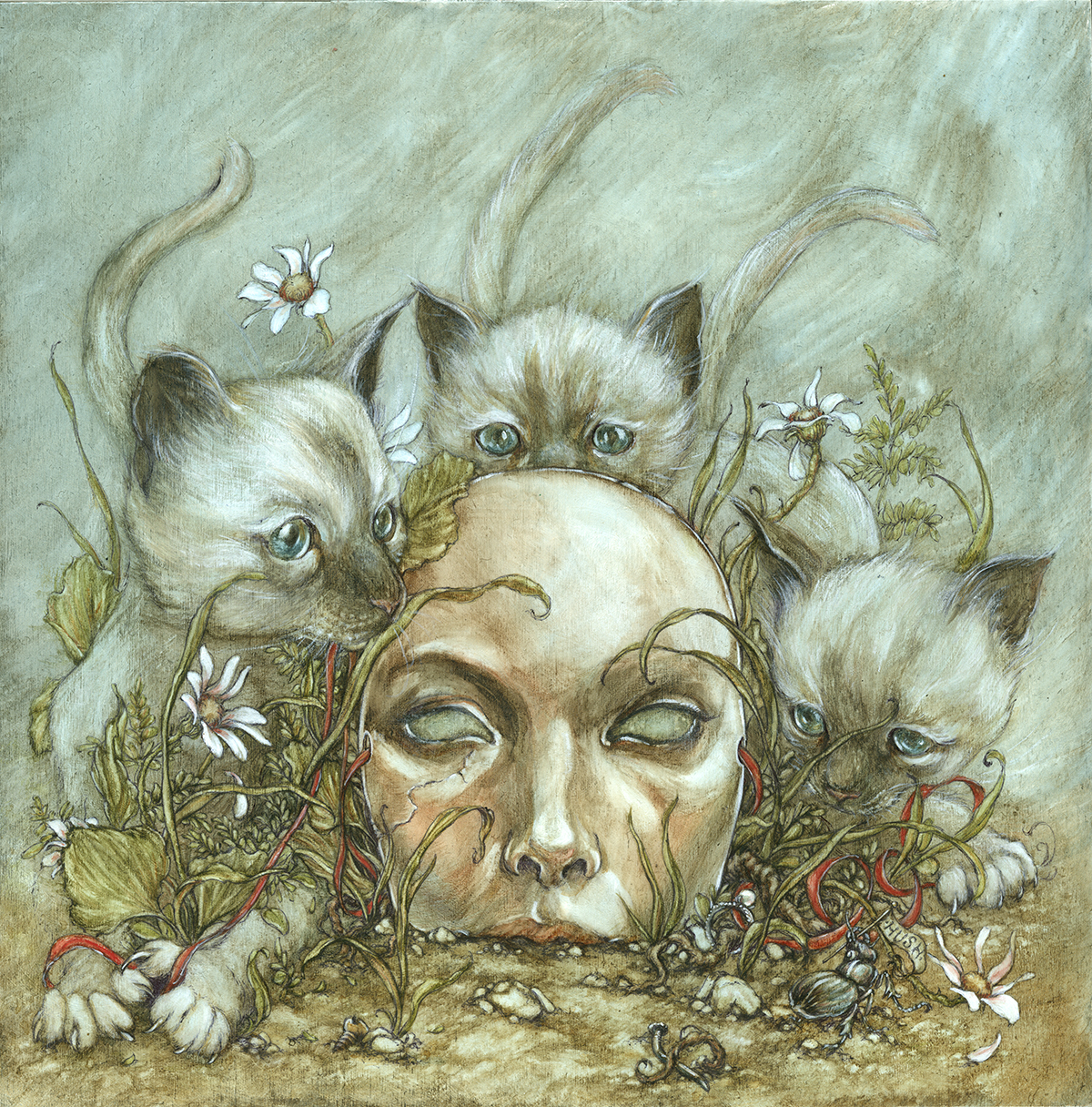
Jeremy Hush

Cover design for US Christmas's "Run Thick in the Night" album
Jeremy Hush is an American artist based in Philadelphia, PA. His imagery focuses on the link between humanity and nature with a particular attention to the psychological aspects of this interaction. He has been creating illustrations for the punk and heavy metal music scenes for many years. With his love for animals and attraction to storytelling, Hush’s work evinces a wonderful balance of masculine and feminine, his dark aesthetics setting off gentle linework and shading. His works are heavy with symbolism, but the meanings behind his symbols are personal. Hush’s most well-known cover to date is for metal band US Christmas’s Run Thick in the Night album, which is bringing him lots of new international attention. Hush is heavily influenced by Arthur Rackham and other 19th century illustrations. The mysteries of nature and his fondness for animals also have a considerable amount of influence over the subjects of his art. His spidery drawings are dark and mysterious, but, like Rackham’s drawings, evoke the fear, love and awe one might have for nature and her power. One never knows what she’ll pull on you next, yet she is beautiful and sublime. Visit his Blog and his Site for more of his works. Sources of the above text Here ans Here


Σάββατο 25 Ιουνίου 2016

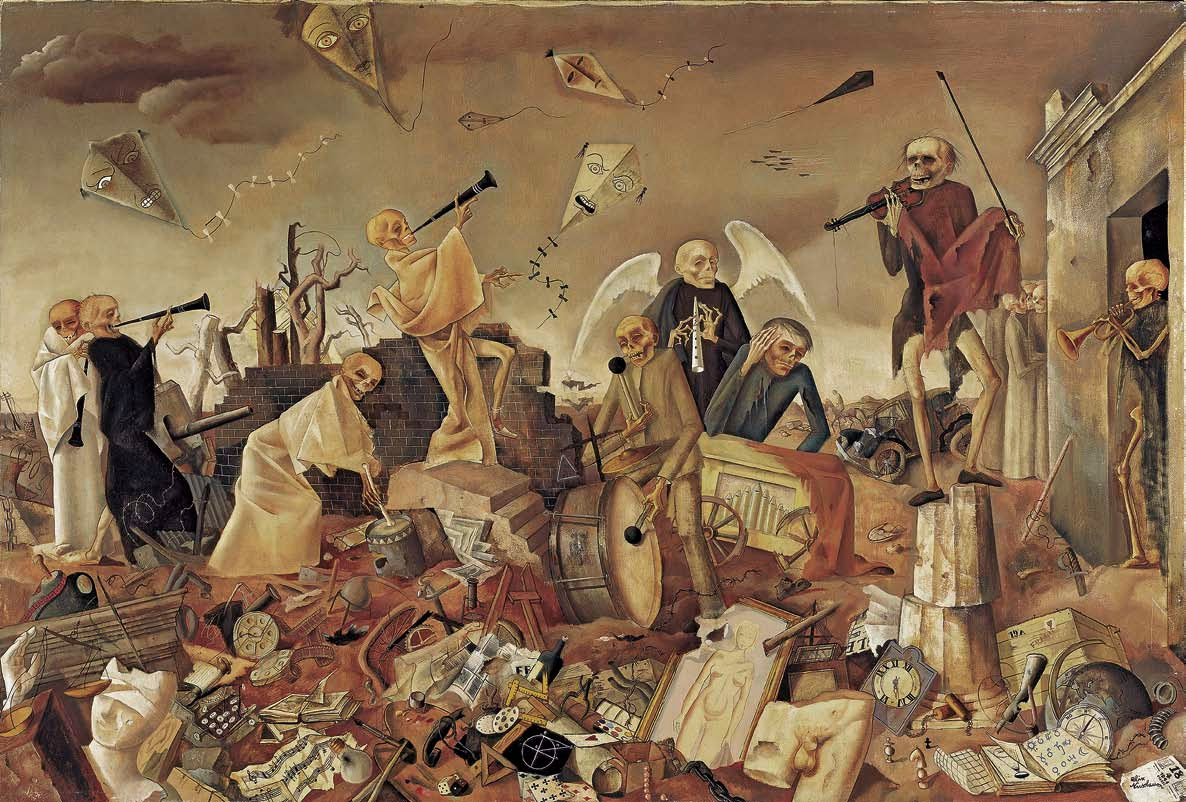
Felix Nussbaum


Dance by the wall (1930)
 Felix Nussbaum (1904 – 1944) was a German-Jewish surrealist painter. Nussbaum’s artwork gives a rare glimpse into the essence of one individual among the victims of the Holocaust. Nussbaum was born in Osnabrück, Germany, as the son of Rahel and Philipp Nussbaum. Philipp was a World War I veteran and German patriot before the rise of the Nazis. He was an amateur painter when he was younger, but was forced to pursue other means of work for financial reasons. He therefore encouraged his son’s artwork passionately.

The Damned (1944)

The Damned (1944) detail
Nussbaum was a lifelong student, beginning his formal studies in 1920 in Hamburg and Berlin, and continuing as long as the contemporary political situation allowed him. In 1933, Nussbaum was studying under a scholarship in Rome at the Berlin Academy of the Arts when the Nazis gained control of Germany. Adolf Hitler sent his Minister of Propaganda to Rome in April to explain to the artist elites how a Nazi artist was to develop, which entailed promoting heroism and the Aryan race. Nussbaum realised at this point that, as a Jew, he could not remain at the academy. 


Prisoner (1940)
 The next decade of Nussbaum's life was characterised by fear, which is reflected in his artwork. In 1934 he took Felka Platek, a painter whom he had met while studying in Berlin and would later marry during their exile in Brussels in 1937, to meet his parents in Switzerland. Felix's parents eventually grew homesick for Germany and, against his fierce objections, they returned. This was the last time Felix would see his mother and father — the source of his spiritual and financial support. Felix and Felka would spend the next ten years in exile, mostly in Belgium, a period of emotional and artistic isolation for him but also one of the most artistically productive in his life.

The Fear (1941)
 After Nazi Germany attacked Belgium in 1940, Nussbaum was arrested by Belgian police as a "hostile alien" German, and was subsequently taken to the Saint-Cyprien camp in France. The desperate circumstances in the camp influenced his pictures of that time. He eventually signed a request to the French camp authorities to be returned to Germany. On the train ride from Saint Cyprien to Germany, he managed to escape and rendezvous with Felka in Brussels, and they began a life in hiding. Without residency papers, Nussbaum had no way of earning an income, but friends provided him with shelter and art supplies so that he could continue his craft. The darkness of the next four years of his life can be seen in the expression of his artwork from that period.

Triumph of Death (1944)
1944 was the year in which the plans of Nazi Germany had the greatest impact on the Nussbaum family. Philipp and Rahel Nussbaum were killed at Auschwitz in February. In July, Nussbaum and his wife were found hiding in an attic by German armed forces. They were arrested, sent to the Mechelen transit camp and given the numbers XXVI/284 and XXVI/285. On August 2 they arrived at Auschwitz, and a week later Felix was murdered at the age of 39. On September 3, Nussbaum’s brother was sent to Auschwitz, and on September 6 his sister-in-law and niece were also murdered there. In December, his brother – the last of the family – died from exhaustion in the camp at Stutthof. Within one year, the entire Nussbaum family had been murdered.