
 |
| Solitude |
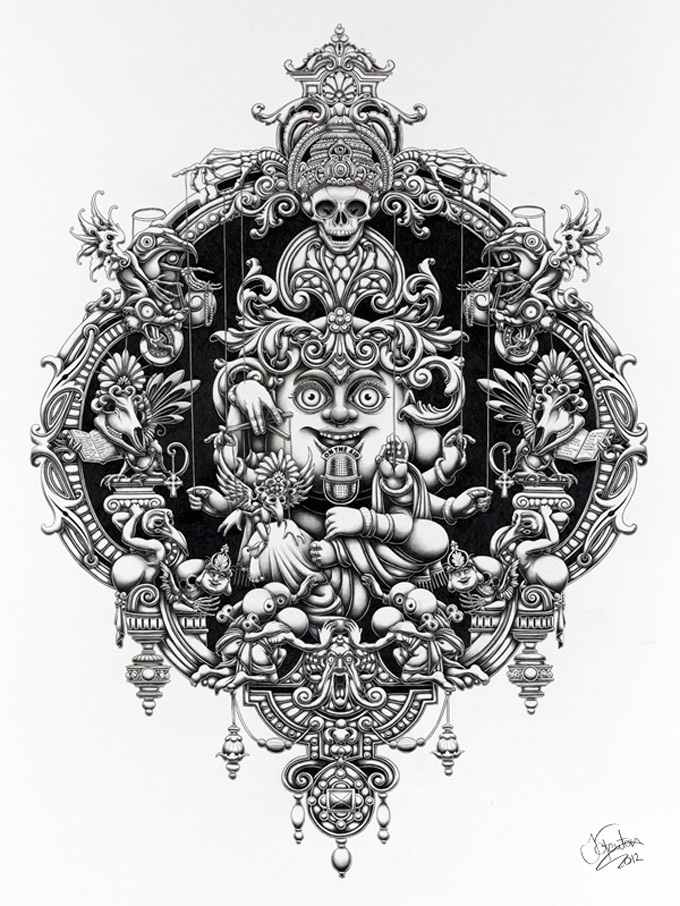
Jonathan "Joe" Simon Bramley-Fenton (born 1971, London) is an English artist, designer, sculptor and illustrator, who works in monochrome using graphite, ink and acrylics on paper.

He has worked on a number of feature films as a concept designer and sculptor, including The Brothers Grimm directed by Terry Gilliam and The Hitchhiker's Guide to the Galaxy directed by Garth Jennings. Fenton's intricate drawings can be found in art galleries, corporate and private collections around the world. Fenton became internationally-known through his first large scale drawing rendered in graphite, acrylics, gouache, and ink, called Solitude. Completed in 2011, Solitude took over 10 months to produce, with its size being approximately 8 feet wide and 5.5 feet high.

Fenton's art work is influenced by many of the early surrealists. Embracing the grotesque by his employment of Hieronymus Bosch-like figures that are gangly, writhing and cramped, Fenton also uses motifs that suggest Eastern philosophy and Middle Eastern architecture whilst maintaining a feel for European Baroque and Rococo with complex frame ornamentation and plant-like details. A common theme in all his works which recurs again and again is that of death and the fear of death. The fanciful and even freakish nature of his images seem to spring from the need to distance himself from the fear while at the same time acknowledging it.
Visit his SITE for more



 |
| Mark Tremonti's guitar is decorated by J.Fenton |


